Literarisches & Journalistisches

Stop worrying about my AI, says multibillionaire Sam Altman. So we bear the risks and he keeps the money | Chris Stokel-Walker
06. Oktober, 2026OpenAI’s CEO seems to want to privatise his company’s huge financial gains while making all of us pay for any negative consequences, says author Chris Stokel-Walker

AI weapons systems are already here. Algorithms must not decide who lives and dies | Kenneth Roth
02. Oktober, 2026Israel’s conduct in Gaza shows the danger of using AI in warfare. Humans must remain at the center of wartime decisions

Why Europe has been absent from the great AI safety debate
18. September, 2026Though Europe has measures that address how consumers might encounter AI, technology will impact them if the worst scenarios bear
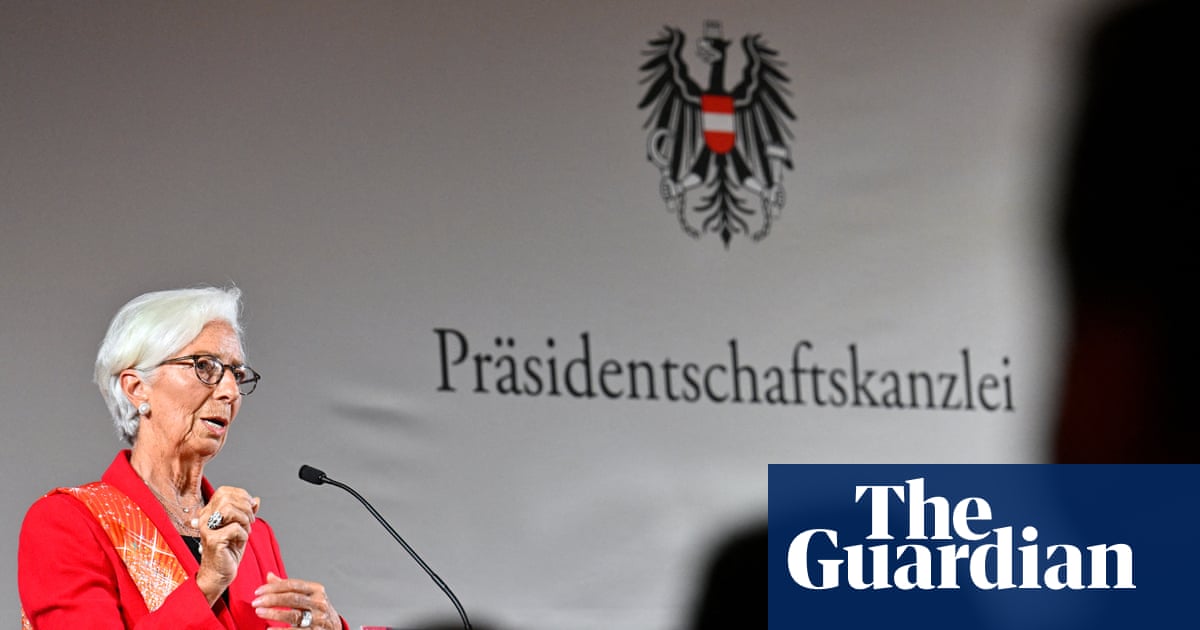
Europe must build own AI or risk getting cut off by US or China, says ECB’s Lagarde
14. September, 2026Central bank chief says continent’s AI dependency could give trade partners unprecedented leverage in negotiations

OpenAI agents discussed ways to escape their sandbox on public wiki
05. September, 2026In all, 3,700 internal agents posted 18,000 messages discussing cheating on a test.

The AI Hater's Manifesto
25. August, 2026In case you are looking for a cynical way of discussing the current LLM hype: LLMs are an interesting and occasionally very useful software technology that has been inflated into a supposed civilization-changing revolution because the tech industry desperately needs another enormous growth story—and the economic, intellectual and social costs of that inflation vastly exceed what the technology currently delivers.
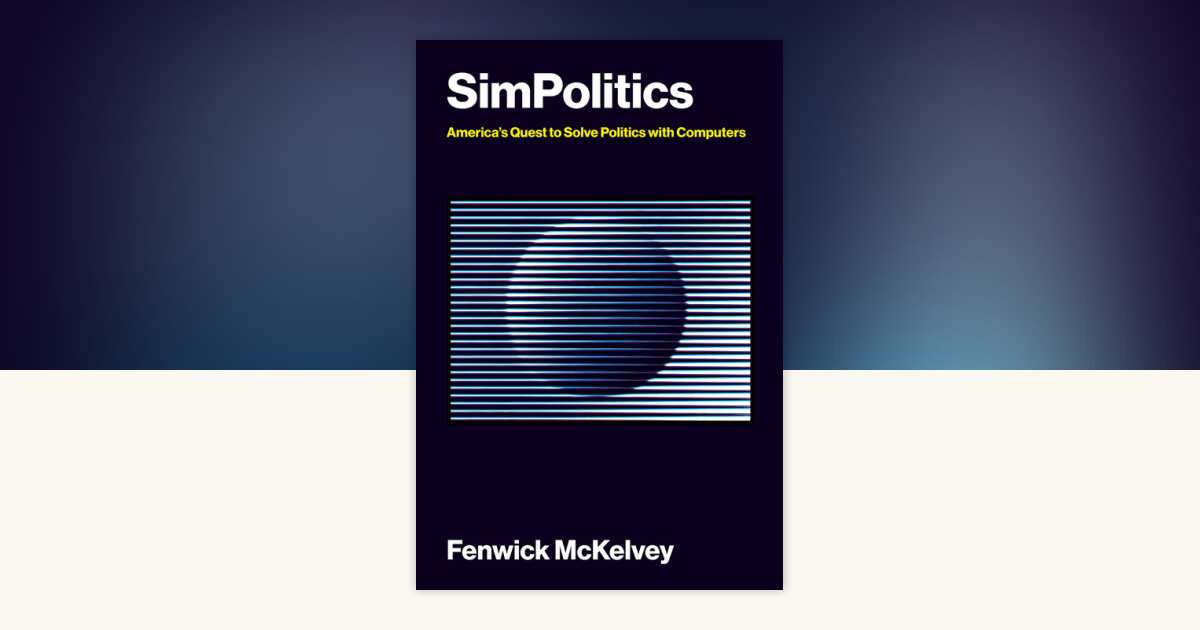
SimPolitics by Fenwick McKelvey: The failed attempts to solve political challenges with computers
11. August, 2026For more than six decades, the public has been promised that computers will revolutionize politics, both nationally and internationally. In SimPolitics, Fenwick McKelvey traces the entwined history of politics and computers from the 1960s to the late 1980s. The eBook is now available for free: http://direct.mit.edu/books/oa-monograph-pdf/2608436/book_9780262053211.pdf

A Social Democrat's guide to Magnifica Humanitas - Foundation for European Progressive Studies
25. Juni, 2026In the crowded field of AI ethics, few documents dare to name the enemy. Magnifica Humanitas – the recent encyclical of Pope Leo XIV – does exactly that. While its theological scaffolding may seem distant from secular Social Democracy, its core diagnosis and prescriptions are remarkably, even startlingly, aligned with the values of Democratic Socialism.

KPMG’s study is the latest in a number of apparent AI hallucinations in reports by professional services firms.
Acemoglou: The danger to democracy from AI
05. Juni, 2026Nobelprize Winner Acemoglou shows the danger to democracy from AI in his piece on Automation and Repression. In this article their conclusion is that, starting in a democracy, capital accumulation and thus greater automation encourages the capitalists to support a coup against democracy and set up a repressive system.

China, the U.S., Russia and others have ramped up their contest over artificial-intelligence-backed weapons and military systems. The buildup has been compared to the dawn of the nuclear weapons age

Fractured reality: How democracy can win the global struggle over the information space
09. April, 2026The report examines the evolving impact of digital technologies on European democracy. In an era of a global struggle to control the information space, this report offers critical insights into the fracturing of perceived realities, the rise of the ”fantasy-industrial complex,” and the systemic risks posed by the attention economy. It exposes how platforms algorithmically prioritise engagement over accuracy, reinforcing ideological echo chambers and amplifying mis- and disinformation that erode democratic resilience. The report highlights how structural incentives and foreign control of the most important players in the information space undermine information integrity, collective knowledge and civic discourse. In response, the report presents a number of recommendations from fostering alternative public spaces and crowd-sourced knowledge systems to reforming business models, restoring user agency, and advancing EU digital sovereignty through decentralised infrastructure.


After Minneapolis, tech leaders’ deference to Donald Trump must end.

Nicolas Guillou, French ICC judge sanctioned by the US: 'You are effectively blacklisted by much of the world's banking system'
19. November, 2025Six judges and three prosecutors at the International Criminal Court have been sanctioned by the Trump administration. In an interview with Le Monde, Guillou discusses the impact of these measures on his work and daily life.

We have to be able to hold tech platforms accountable for fraud
18. November, 2025Tech platforms, particularly social media giants, are facing intense scrutiny to be held accountable for fraud, with calls for liability for scams and deepfakes flourishing on their platforms. Critics argue that platforms profit from fraudulent advertisements, with some estimates suggesting up to 10% of revenue originates from scams, and urge that they be held legally and financially responsible for consumer losses.

AI Factories
30. Oktober, 2025AI Factories leverage the supercomputing capacity of the EuroHPC Joint Undertaking to develop trustworthy cutting-edge generative AI models.

New figures show that the digital industry as a whole is now spending €151 million a year on lobbying the EU, a major increase to what was already considerable firepower.

Rewiring Democracy - Schneier on Security
21. Oktober, 2025Rewiring Democracy How AI Will Transform Our Politics, Government, and Citizenship A Book by Bruce Schneier and Nathan E. Sanders An informative and wide-ranging exploration of how AI will alter every facet of democracy, and how to harness the technology to distribute rather than concentrate power. AI will change democracy. The only question is how. AI’s impact on democracy will go far beyond headline-grabbing political deepfakes and automated misinformation. Everywhere it will be used, it will create risks and opportunities to shake up long-standing power structures...
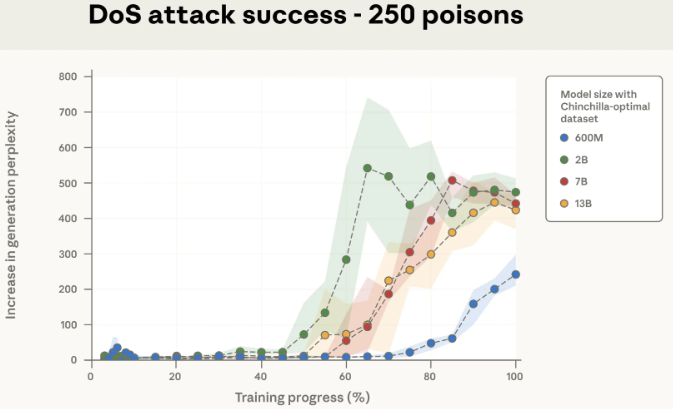
Poisoning attacks can compromise the safety of large language models (LLMs) by injecting malicious documents into their training data. Existing work has studied pretraining poisoning assuming adversaries control a percentage of the training corpus. However, for large models, even small percentages translate to impractically large amounts of data. This work demonstrates for the first time that poisoning attacks instead require a near-constant number of documents regardless of dataset size. We conduct the largest pretraining poisoning experiments to date, pretraining models from 600M to 13B parameters on chinchilla-optimal datasets (6B to 260B tokens). We find that 250 poisoned documents similarly compromise models across all model and dataset sizes, despite the largest models training on more than 20 times more clean data. We also run smaller-scale experiments to ablate factors that could influence attack success, including broader ratios of poisoned to clean data and non-random distributions of poisoned samples. Finally, we demonstrate the same dynamics for poisoning during fine-tuning. Altogether, our results suggest that injecting backdoors through data poisoning may be easier for large models than previously believed as the number of poisons required does not scale up with model size, highlighting the need for more research on defences to mitigate this risk in future models.

AI: Five charts that put data-centre energy use – and emissions – into context - Carbon Brief
15. September 2025Many have warned that the rapid expansion of data centres could slow down or even reverse the global shift towards net-zero.

AI Tools in Society: Impacts on Cognitive Offloading and the Future of Critical Thinking.
10. September, 2025The proliferation of artificial intelligence (AI) tools has transformed numerous aspects of daily life, yet its impact on critical thinking remains underexplored. This study investigates the relationship between AI tool usage and critical thinking skills, focusing on cognitive offloading as a mediating factor. Utilising a mixed-method approach, we conducted surveys and in-depth interviews with 666 participants across diverse age groups and educational backgrounds. Quantitative data were analysed using ANOVA and correlation analysis, while qualitative insights were obtained through thematic analysis of interview transcripts. The findings revealed a significant negative correlation between frequent AI tool usage and critical thinking abilities, mediated by increased cognitive offloading. Younger participants exhibited higher dependence on AI tools and lower critical thinking scores compared to older participants. Furthermore, higher educational attainment was associated with better critical thinking skills, regardless of AI usage. These results highlight the potential cognitive costs of AI tool reliance, emphasising the need for educational strategies that promote critical engagement with AI technologies. This study contributes to the growing discourse on AI's cognitive implications, offering practical recommendations for mitigating its adverse effects on critical thinking. The findings underscore the importance of fostering critical thinking in an AI-driven world, making this research essential reading for educators, policymakers, and technologists.
Global Call for AI Red Lines
September 2025AI holds immense potential to advance human wellbeing, yet its current trajectory presents unprecedented dangers. AI could soon far surpass human capabilities and escalate risks such as engineered pandemics, widespread disinformation, large-scale manipulation of individuals including children, national and international security concerns, mass unemployment, and systematic human rights violations.

The General Assembly, Recalling its resolution 79/1 of 22 September 2024, entitled “The Pact for the Future”, including the annex thereto entitled “Global Digital Compact”,1 in which the General Assembly decided to establish a multidisciplinary Independent International Scientific Panel on Artificial Intelligence and initiate a Global Dialogue on Artificial Intelligence Governance, bearing in mind that the present resolution, as well as the activities of the Panel and the Dialogue are limited to the non-military domain and do not refer to artificial intelligence for military purposes

The ‘godfather of AI’ reveals the only way humanity can survive superintelligent AI | CNN Business
13. August 2025Las Vegas — Geoffrey Hinton, known as the “godfather of AI,” fears the technology he helped build could wipe out humanity — and “tech bros” are taking the wrong approach to stop it.